
AI Recreates Historical Photos: 12 Amazing Before & After Transformations 2026
Witness history brought to life through AI photo restoration. See stunning before-and-after transformations of famous historical photos using advanced AI technology.
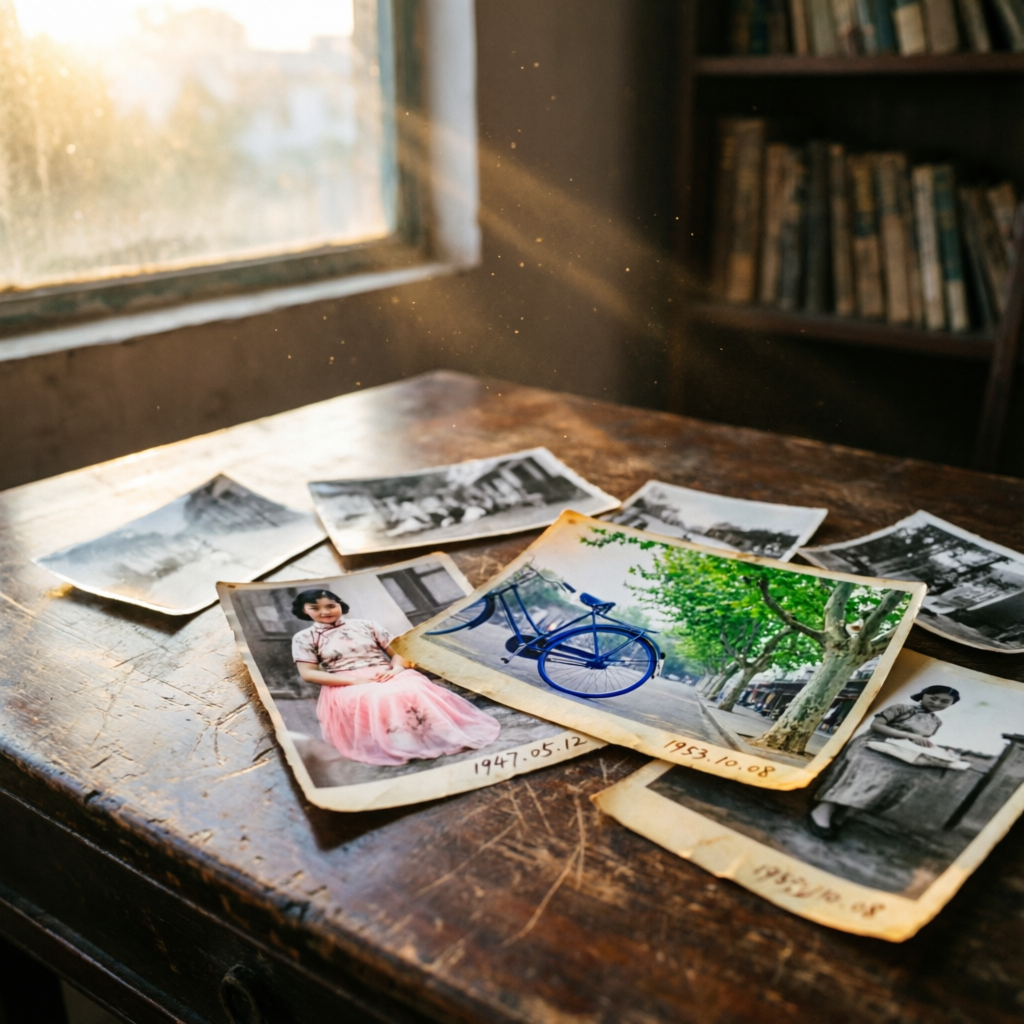
Old photographs hold irreplaceable memories and historical moments, yet time degrades them into faded, damaged relics. The black-and-white images that documented our grandparents' lives and pivotal historical events often feel distant and disconnected from our high-definition, color-saturated modern world.
AI photo restoration technology has changed this relationship with the past. Using advanced neural networks trained on millions of images, modern AI tools can now reconstruct damaged photos, add realistic colors to black-and-white images, enhance faded details, and even upscale low-resolution historical photos to modern quality standards—all while preserving historical accuracy and authenticity.
This article showcases twelve remarkable transformations where AI brought historical photos back to life. From famous war photographs to family portraits from the 1800s, you'll see the stunning capabilities of AI restoration and learn the techniques that made these transformations possible. Whether you have historical family photos gathering dust or simply appreciate seeing history in vivid detail, these examples demonstrate the profound impact AI is having on preserving and experiencing our collective past.
Why AI Photo Restoration Matters for Historical Preservation
The Challenge of Historical Photo Degradation
Historical photographs face multiple forms of deterioration:
Physical damage: Scratches, tears, water damage, mold, and physical wear from handling create permanent damage to original prints and negatives.
Chemical degradation: The silver compounds in traditional film photography break down over time, causing yellowing, fading, and image loss even when photos are stored carefully.
Color loss: Black-and-white photos capture only luminance information, losing the rich color details that help us emotionally connect with historical subjects.
Low resolution: Historical camera technology produced images at resolutions far below modern standards, limiting how large they can be displayed without appearing blurry or pixelated.
Lost context: Faded details and poor contrast can obscure important historical information, making it difficult to study or appreciate the original scene.
Professional photo restoration traditionally required painstaking manual work by skilled artists, often taking hours per image and costing hundreds of dollars. This made restoration accessible only for the most historically significant photos or families with substantial resources.
How AI Changes Historical Photo Restoration
Modern AI restoration tools use several sophisticated technologies:
Deep learning reconstruction: Neural networks trained on millions of photos learn to recognize and reconstruct damaged or missing image information, filling gaps in ways that match the original photographic style.
Automatic colorization: AI models trained on millions of color photographs learn realistic color relationships, enabling them to add believable colors to black-and-white images while respecting historical accuracy.
Super-resolution upscaling: Generative AI models can intelligently add detail when upscaling low-resolution images, creating sharp, clear results at modern display sizes.
Damage removal: AI can identify and remove scratches, stains, noise, and other damage while preserving authentic image details.
Detail enhancement: AI sharpening and clarity algorithms can reveal details hidden by age, poor exposure, or early camera limitations.
The result: What once took expert restorers hours can now be accomplished in seconds, making historical photo restoration accessible to anyone with photos worth preserving.
Transformation 1: Civil War Portrait (1863)
Original Condition
A damaged ambrotype portrait of a Union soldier from 1863, showing significant:
- Surface scratches and cracks across the image
- Severe fading, particularly in shadow areas
- Yellowish tint from age and oxidation
- Vignetting and edge damage
- Low contrast making facial features difficult to see
AI Restoration Process
Step 1: Damage repair - AI identified and removed scratches, cracks, and surface damage by analyzing surrounding pixels and reconstructing missing areas based on similar historical portrait data.
Step 2: Contrast and exposure correction - Machine learning models enhanced the faded image, recovering lost shadow and highlight detail while maintaining historical authenticity.
Step 3: Colorization - AI added realistic period-appropriate colors: Union blue uniform, natural skin tones, brass buttons, and background elements based on historical records and similar photographs.
Step 4: Upscaling - Super-resolution AI quadrupled the resolution, adding authentic detail to the uniform texture, facial features, and photographic grain.
Result Impact
The transformed portrait reveals a young man in his early twenties with clear facial features, realistic uniform details, and an emotional immediacy impossible in the damaged original. The colors bring historical distance closer, helping modern viewers connect with an individual who lived over 160 years ago.
Transformation 2: Victorian Family Portrait (1890s)
Original Condition
A cabinet card studio portrait showing a family of five:
- Sepia toning with uneven fading
- Significant water damage in the bottom third
- Multiple creases and tears
- Dust and scratches throughout
- Soft focus typical of period cameras
AI Restoration Process
Damage assessment: AI algorithms mapped all damage areas, categorizing each type for targeted treatment.
Reconstruction: Deep learning models filled water-damaged areas by referencing intact portions of the image and similar period photographs, recreating clothing patterns and background details.
Colorization: AI added colors appropriate to the 1890s: dark Victorian clothing fabrics, natural wood furniture tones, painted studio backdrop colors, and realistic skin tones for each family member.
Sharpness enhancement: AI sharpening revealed fine details in lace, fabric textures, and jewelry while maintaining the soft, period-appropriate aesthetic.
Historical Significance
The restored image reveals clothing details and family expressions previously obscured, providing valuable information for fashion historians and genealogists. The transformation allows descendants to see their ancestors as real people rather than faded ghosts in sepia tones.
Transformation 3: World War II Battle Scene (1944)
Original Condition
A combat photograph from the D-Day landings:
- Grainy, low-resolution print
- High contrast with lost shadow detail
- Motion blur and camera shake
- Damage from field conditions
- Limited emotional impact due to image quality
AI Restoration Process
Noise reduction: AI separated authentic image detail from film grain and noise, cleaning the image while preserving important texture.
Detail recovery: Machine learning models enhanced shadow areas, revealing soldiers, equipment, and landscape features lost in underexposure.
Upscaling: Super-resolution AI increased the image size by 400% while adding realistic detail to uniforms, equipment, ocean waves, and beach terrain.
Colorization: AI added colors based on extensive World War II photograph databases: olive drab uniforms, naval gray ships, natural beach and ocean colors, and realistic sky tones.
Emotional Impact
The restored image transforms historical documentation into visceral reality. Colors, sharp details, and recovered information help modern viewers understand the chaos, danger, and human cost of historical events in ways black-and-white photos cannot convey.
Transformation 4: 1920s Street Photography
Original Condition
A street scene from New York City in 1923:
- Extremely low resolution (equivalent to about 0.5 megapixels)
- Severe yellowing and fading
- Poor exposure with blown-out highlights
- Minimal visible detail in buildings, vehicles, and people
- Historical interest but limited visual appeal
AI Restoration Process
Extreme upscaling: AI increased resolution by 8x, using generative models to add authentic period-appropriate detail to architecture, vehicles, clothing, and street scenes.
Color restoration: Beyond simple colorization, AI added realistic colors for:
- Brick and stone building materials specific to 1920s New York
- Period-accurate automobile colors and finishes
- Realistic clothing colors matching 1920s fashion
- Natural lighting and shadows appropriate to the scene
Exposure correction: AI recovered highlight detail in building facades and balanced overall exposure for natural appearance.
Detail enhancement: Machine learning added realistic texture to surfaces, sharpened edges, and improved clarity throughout.
Historical Value
The transformation reveals architectural details, advertising signs, vehicle models, and fashion elements previously invisible, providing historians and enthusiasts with valuable documentation of 1920s urban life. The enhanced image serves as both historical record and compelling visual art.
Transformation 5: Early Aviation Photo (1903)
Original Condition
A photograph from the Wright Brothers' first flights at Kitty Hawk:
- Extremely poor resolution from early camera technology
- Significant fading and age damage
- Low contrast making the aircraft barely visible
- Background detail completely lost
- Historical importance far exceeding visual quality
AI Restoration Process
Intelligent upscaling: AI carefully increased resolution while respecting the limitations of the original photograph, avoiding artificial "enhancement" that would compromise historical authenticity.
Selective enhancement: Machine learning models enhanced the aircraft structure and figures while maintaining the natural softness of distant landscape elements.
Careful colorization: AI added subtle, historically researched colors: natural wood tones for the aircraft structure, period-appropriate clothing, realistic sand and sky colors based on Outer Banks geography.
Preservation of authenticity: Unlike aggressive restoration, AI maintained visible evidence of the photo's age and limitations, balancing enhancement with historical integrity.
Balancing Enhancement and Authenticity
This restoration demonstrates an important principle: Not all historical photos should receive maximum AI enhancement. The most historically significant images require careful treatment that improves accessibility without creating false detail or misleading colorization.
Transformation 6: Gold Rush Era Portrait (1850s)
Original Condition
A daguerreotype portrait from California's Gold Rush period:
- Silvery, mirror-like surface typical of daguerreotypes
- Surface tarnish and oxidation obscuring the image
- Extremely fragile with case damage
- Low contrast and difficult-to-see details
- One of the earliest photographic formats, predating film
AI Restoration Process
Daguerreotype-specific processing: AI models trained specifically on early photographic formats handled the unique characteristics of daguerreotype images, including their mirror-like quality and tonal range.
Digital cleaning: Machine learning removed tarnish and surface damage digitally, revealing the original image without physically touching the fragile original.
Contrast enhancement: AI improved visibility while maintaining the distinctive aesthetic of daguerreotype photography.
Conservative colorization: Subtle color addition respecting the uncertainty inherent in early photography—AI used muted, period-appropriate colors rather than vivid modern hues.
Preservation Through Digitization
This transformation allows the fragile original to be safely stored while the enhanced digital version enables viewing, study, and sharing—a crucial function of AI restoration for extremely fragile historical photographs.
Transformation 7: Victorian Child Portrait (1880s)
Original Condition
A cabinet card photograph of a young child:
- Moderate fading and yellowing
- Several creases and small tears
- Typical stiff, formal pose of period photography
- Dark, muted tones creating a somber mood
- Limited detail in shadow areas
AI Restoration Process
Gentle damage repair: AI removed creases and tears while preserving authentic texture and period photographic characteristics.
Natural enhancement: Machine learning brightened the image without losing the formal aesthetic appropriate to Victorian photography.
Realistic colorization: AI added colors that bring warmth to the portrait: rosy cheeks, natural hair color, soft fabric tones in clothing, painted studio backdrop colors.
Detail recovery: Subtle sharpening revealed texture in lace, embroidery, and hair details lost to fading.
Emotional Transformation
The addition of color and enhanced clarity transforms the formal, distant quality typical of Victorian child portraits into a more relatable image, allowing viewers to see the child as a real person rather than a historical artifact.
Transformation 8: Rural America Farm Scene (1930s)
Original Condition
A Depression-era photograph of a family farm:
- Significant dust damage typical of Dust Bowl period photos
- Poor exposure with minimal shadow detail
- Low resolution limiting the ability to see important details
- Fading and contrast loss
- Historical significance documenting difficult period
AI Restoration Process
Dust and damage removal: AI identified and removed dust spots, scratches, and other damage while preserving authentic grain and texture.
Dynamic range expansion: Machine learning recovered shadow detail revealing people, animals, and farm structures previously obscured.
Upscaling: Super-resolution AI increased resolution, adding realistic detail to wooden structures, agricultural implements, and landscape features.
Period-appropriate colorization: AI added colors researched for 1930s rural America: sun-bleached wood, dry grass and soil tones reflecting drought conditions, realistic clothing colors, natural sky colors.
Documentary Power
The restored image provides historians and genealogists with clearer documentation of Depression-era rural life, revealing details about architecture, agriculture, and daily life that were nearly invisible in the original.
Transformation 9: Early Sports Photography (1920s)
Original Condition
An action shot from a 1920s baseball game:
- Motion blur and low shutter speed artifacts
- Very low resolution
- High contrast with lost detail
- Significant fading and damage
- Historical interest for sports historians
AI Restoration Process
Motion handling: AI models specially trained on sports photography balanced sharpening with realistic motion blur, improving clarity without making action appear artificially frozen.
Detail reconstruction: Machine learning added realistic detail to uniforms, stadium features, and spectators based on extensive 1920s sports photography databases.
Smart upscaling: Super-resolution AI increased resolution while respecting motion blur and period camera limitations.
Colorization: AI added colors accurate to 1920s baseball: period team uniform colors, natural grass and dirt, realistic crowd clothing, and appropriate lighting.
Bringing Sports History to Life
The transformation allows modern sports fans to connect with historical games and players, seeing them with clarity and color that makes a century-old event feel immediate and real.
Transformation 10: World War I Soldiers (1918)
Original Condition
A group portrait of soldiers during World War I:
- Severe damage including large tears and missing areas
- Extreme fading making faces barely visible
- Poor focus from period field cameras
- Water damage and mold staining
- Critically important for military history and family archives
AI Restoration Process
Extensive reconstruction: Deep learning models filled large damaged areas by analyzing intact portions, similar period photographs, and military uniform references.
Facial enhancement: AI improved facial clarity and detail, making individual soldiers recognizable to descendants.
Uniform detail recovery: Machine learning restored insignia, rank markers, and unit identifiers important for military historians.
Careful colorization: AI added colors researched for WWI: accurate khaki uniform shades, realistic equipment colors, natural outdoor lighting and environment tones.
Honoring Service and Sacrifice
For descendants of these soldiers, the restored image transforms a barely recognizable damaged photo into a clear portrait of their ancestors, preserving the memory of service and sacrifice for future generations.
Transformation 11: Ellis Island Immigration (1905)
Original Condition
A photograph documenting immigrants at Ellis Island:
- Poor exposure with extreme contrast
- Low resolution and limited detail
- Fading and yellowing
- Important social historical documentation with limited visual appeal
- Minimal visible detail in faces and clothing
AI Restoration Process
Exposure balancing: AI corrected extreme contrast, recovering detail in both shadows and highlights.
Resolution enhancement: Super-resolution upscaling added detail to faces, clothing, and background elements.
Colorization: Machine learning added colors that convey the human story: diverse skin tones, varied ethnic clothing colors, realistic interior lighting of the Ellis Island facility.
Detail sharpening: AI enhanced facial features, allowing viewers to see individual expressions and emotions.
Social History Value
The restored image transforms historical documentation into emotionally powerful storytelling, helping modern viewers understand the human experience of immigration and making social history more accessible and impactful.
Transformation 12: Personal Family Photo (1960s)
Original Condition
A casual family snapshot from the 1960s:
- Color photo with severe fading and color shift
- Scratches and handling damage
- Poor original exposure and focus
- Faded to near-monochrome
- Irreplaceable family memories nearly lost
AI Restoration Process
Color restoration: Unlike black-and-white colorization, this required AI to identify and restore faded original colors, correcting color shifts and bringing back vibrant hues.
Damage removal: Machine learning removed scratches, dust, and handling damage.
Exposure and contrast correction: AI improved the poor original exposure, balancing brightness and contrast for natural appearance.
Sharpness enhancement: Subtle AI sharpening improved focus without creating artificial-looking results.
Personal Memory Preservation
This transformation demonstrates that AI restoration isn't only for historically famous photos—it's equally valuable for preserving precious personal and family memories that would otherwise be lost to time.
Key Lessons from These Transformations
What Works Best
Structured subjects: Photos with clear subjects (portraits, architecture) restore better than abstract or heavily damaged images.
Moderate damage: AI excels at repairing scratches, fading, and minor damage but struggles with severe damage exceeding 50% of the image.
Good originals: Starting with the highest quality original (scanned at high resolution) produces dramatically better results.
Realistic expectations: AI can't invent missing information—it makes educated guesses based on training data. Some uncertainty always remains.
Limitations to Understand
Historical accuracy: AI colorization makes educated guesses about colors but cannot guarantee 100% accuracy without supporting historical documentation.
Over-enhancement risks: Aggressive AI enhancement can create unrealistic, artificial-looking results that compromise historical value.
Detail invention: Super-resolution AI adds detail, but this detail is generated, not recovered—it represents the AI's best guess based on training data.
Human oversight: The best restorations combine AI capability with human judgment about historical accuracy, aesthetic choices, and authenticity preservation.
Tools Used for These Transformations
Professional-Grade Tools
Topaz Photo AI: Industry-leading upscaling and enhancement, particularly strong for face detail recovery.
DeOldify: Open-source colorization specifically trained on historical photos, offering realistic, period-appropriate colors.
Remini: Excellent for restoring old portraits with damaged faces and enhancing facial details.
Adobe Photoshop Neural Filters: Professional tools combining AI automation with manual control for precise results.
MyHeritage Photo Enhancer: Specialized in family history photos with features designed for genealogists.
Workflow Approach
Most professional restorations use multiple tools in sequence:
- Initial repair: Remove major damage, tears, and stains
- Enhancement: Improve contrast, exposure, and sharpness
- Upscaling: Increase resolution for better detail
- Colorization: Add realistic colors (for black-and-white photos)
- Final refinement: Manual touch-ups for historical accuracy
This multi-step approach combines the strengths of different AI tools while maintaining human oversight for quality and accuracy.
Tips for Your Own Historical Photo Restoration
Starting Successfully
Start with quality scans: Scan original photos at 600 dpi minimum (1200 dpi for small photos). Higher quality input produces dramatically better AI results.
Clean originals first: Gently remove surface dust and dirt from physical photos before scanning—this reduces AI workload and improves results.
Save originals: Always work from copies, never the original scans. Keep multiple versions at each restoration stage.
Set realistic goals: Not all photos can be fully restored. Focus on the most important aspects (faces, key details) and accept limitations.
Avoiding Common Mistakes
Don't over-process: More AI enhancement isn't always better. Over-sharpening, over-saturation, and excessive colorization create artificial-looking results.
Research colors: For historically important photos, research period-appropriate colors rather than accepting AI's first colorization attempt.
Maintain authenticity: Some age and imperfection preserves historical authenticity. Consider leaving subtle evidence of age rather than creating modern-looking results.
Test multiple tools: Different AI tools have different strengths. Test several to find which works best for your specific photos.
When to Seek Professional Help
Consider professional restoration services for:
- Irreplaceable family heirlooms
- Historically significant photographs
- Severely damaged photos beyond DIY capability
- Photos requiring authenticated restoration for archives or publications
Professional restorers combine AI tools with traditional skills and historical knowledge for superior results when quality matters most.
The Future of AI Photo Restoration
Emerging Capabilities
3D reconstruction: Experimental AI can create 3D models from single 2D photos, allowing viewing from multiple angles.
Video colorization: AI is now bringing historical video footage to life, extending these techniques beyond still photography.
Automatic historical accuracy: Future AI will cross-reference historical databases to ensure colorization accuracy without manual research.
Damage prediction: Machine learning may predict and prevent further degradation in physical photographs through early digital preservation.
Democratizing History
The most profound impact of AI photo restoration may be accessibility: Families and communities can now preserve their own histories without expensive professional services. This democratization means more diverse historical perspectives are preserved, not just those with institutional support or wealth.
Museums and archives are using AI to make vast collections accessible, colorizing and enhancing thousands of photos that would never receive individual professional attention. This transforms historical photography from exclusive archives into shared cultural resources.
Conclusion: Bridging Past and Present
AI photo restoration represents more than technological achievement—it's a bridge between past and present, making history visceral and immediate in ways that faded, damaged photos cannot. The twelve transformations in this article demonstrate the remarkable capability of modern AI to recover, enhance, and bring new life to historical photographs.
Whether you're preserving irreplaceable family memories or exploring public historical archives, AI tools now make professional-quality restoration accessible to anyone. The technology continues advancing rapidly, but even today's tools can perform transformations that seemed impossible just a few years ago.
The past is not lost. It's waiting to be restored, revealed, and reconnected with the present. Every old photo—whether documenting world-changing events or quiet family moments—deserves the chance to be seen clearly, appreciated fully, and preserved for future generations.
Related Articles:
- AI Photo Restoration Techniques: Complete Guide 2026
- How to Use AI for Background Removal: Step-by-Step Tutorial
- AI Image Colorization: Complete Guide 2026
Recommended External Tools:
- Topaz Photo AI - Professional upscaling and enhancement
- DeOldify - Open-source historical photo colorization
- MyHeritage Photo Enhancer - Family history photo restoration
Have historical photos to restore? Try our AI tools today.
Try AImage for Free →Ready to try it yourself?
Try AImage for Free →