
From Hobby to Business: Real AI Photography Success Stories in 2026
Discover how everyday photographers turned their hobby into thriving businesses using AI tools. Real stories, proven strategies, and actionable insights for aspiring entrepreneurs.
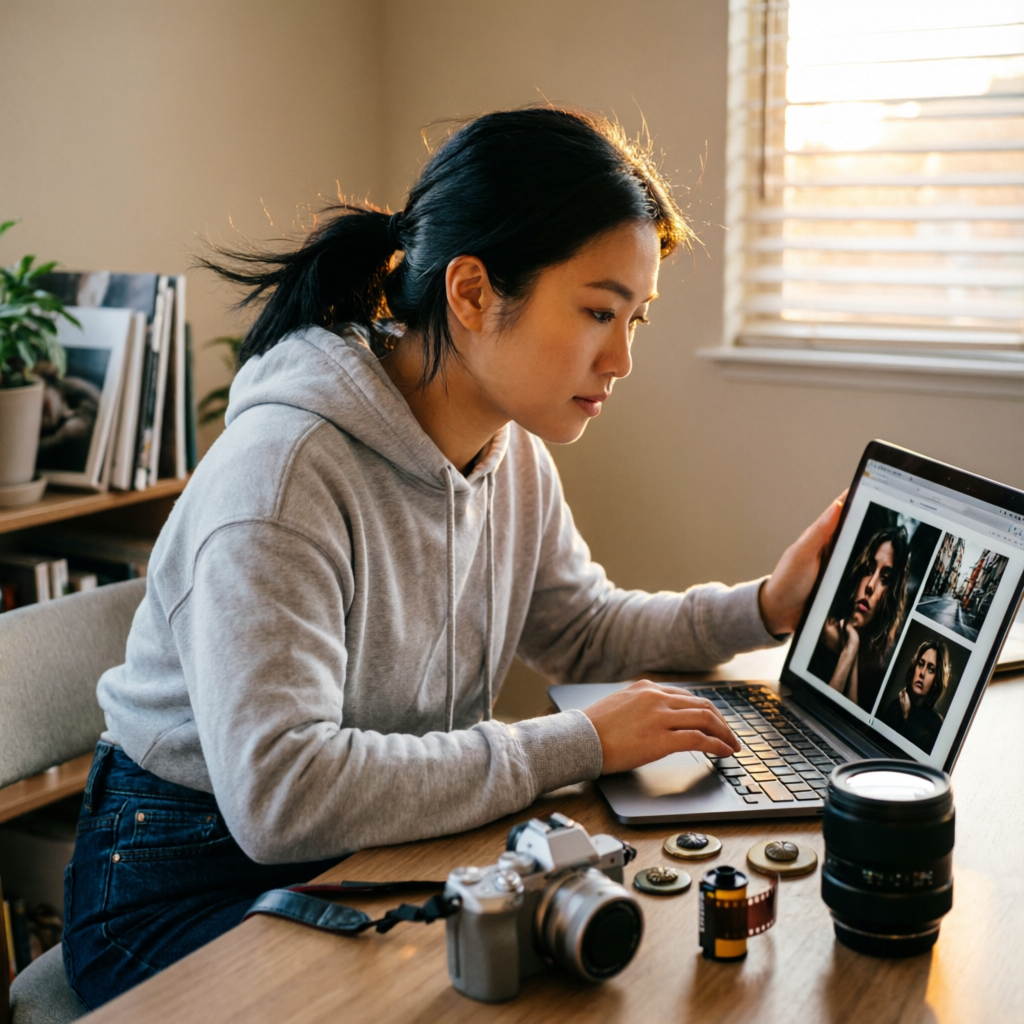
Not long ago, professional photography required expensive equipment, years of technical training, and established connections to turn a profit. Today, AI tools have democratized the industry—enabling passionate hobbyists to launch profitable photography businesses from their bedrooms, often within months.
These aren't get-rich-quick fantasies. They're real stories from ordinary people who leveraged AI photo editing, enhancement, and generation tools to build legitimate income streams. Some now earn five figures monthly. Others have replaced their 9-to-5 jobs entirely. What they share in common: strategic use of AI to overcome traditional barriers to entry.
This article presents five inspiring success stories spanning different niches—real estate photography, portrait restoration, social media content, pet photography, and digital art. Each profile reveals the specific AI tools used, revenue models employed, and lessons learned. Whether you're considering a photography side hustle or want to scale an existing hobby, these proven paths offer practical blueprints.
Why AI Enables Hobby-to-Business Transitions Now
The Traditional Barriers
Before AI tools matured, turning photography into a business required:
Technical Mastery: Years learning Photoshop, Lightroom, and RAW processing Equipment Investment: $5,000-$15,000 for professional cameras and lenses Time Commitment: 3-5 hours editing per client project manually Portfolio Building: Months or years shooting for free to gain experience Geographic Limits: Need for local clients within driving distance
These barriers kept photography largely the domain of full-time professionals and well-funded studios.
How AI Changes Everything
Modern AI tools collapse these barriers:
Instant Expertise: AI handles complex editing tasks automatically—background removal, color correction, skin retouching—without manual skill Affordable Entry: Start with a smartphone camera plus $20-50/month AI subscriptions instead of thousands in equipment Speed Multiplication: Edit 50 photos in the time traditional methods handle 5 Quality Leveling: AI produces consistently professional results from amateur source material Global Markets: Serve clients worldwide through digital delivery; location irrelevant
The result: Passionate amateurs with good taste and business sense can now compete with established pros—and win.
Success Story 1: Real Estate Photography Side Hustle
The Journey: Sarah Chen, Former Marketing Manager
Background:
- Started: March 2025 (13 months ago)
- Previous experience: Weekend architecture photography hobby
- Location: Austin, Texas
- Initial investment: $800 (used DSLR + AI subscriptions)
- Current monthly revenue: $8,500-$12,000
The Opportunity
Sarah noticed local real estate agents posting poorly lit, cluttered property photos on Zillow. She knew better images could help homes sell faster but assumed professional photography was cost-prohibitive for most listings.
Research revealed a massive gap: Professional real estate photographers charged $300-500 per property shoot, pricing out agents working on standard 6% commissions. Yet poor photos demonstrably reduced sale prices and extended time-on-market.
AI Tools Strategy
Sarah built her business on three AI tools:
- Magnific AI (image upscaling): Enhanced phone camera shots to DSLR-quality resolution
- Virtual Staging AI (furniture placement): Added furniture to empty rooms digitally
- Luminar Neo (sky replacement + lighting): Fixed harsh shadows and overcast skies
The Business Model
Pricing: $149 per property (20-25 photos)
- Shoot time: 45 minutes per property
- Editing time: 60 minutes using AI automation
- Client acquisition: Local Facebook groups + agent networking
First month: 2 clients, $298 revenue Month 6: 35 clients, $5,215 revenue Month 12: 65+ clients, consistent $10,000+ monthly
Key Success Factors
Speed: Two-hour turnaround from shoot to delivery (agents loved this) Consistency: AI ensured every image met quality standards Scalability: Could handle 3-4 shoots daily without fatigue Niche Focus: Specialized exclusively in real estate instead of general photography
Lessons Learned
"I tried competing with established photographers at first and got nowhere. The breakthrough came when I targeted a specific underserved niche—realtors working middle-market homes ($300k-$600k) who needed quality but couldn't justify $500 shoots. AI let me deliver 90% of the quality at 30% of the price while still making great margins."
Current Status: Sarah quit her marketing job in January 2026, now runs the business full-time with one assistant editor.
Success Story 2: Family Photo Restoration Service
The Journey: Marcus Thompson, Retired IT Specialist
Background:
- Started: July 2025 (9 months ago)
- Previous experience: Amateur photo hobbyist, no professional background
- Location: Remote (Birmingham, UK)
- Initial investment: $150 (AI subscriptions only)
- Current monthly revenue: $4,200-$5,800
The Market Gap
After using AI tools to restore damaged photos of his late grandmother, Marcus realized thousands of families had old, faded, damaged photos gathering dust—but professional restoration services cost $50-200 per image and took weeks.
AI Tools Strategy
Marcus' restoration workflow uses:
- Remini (damage repair + sharpening): Fixes scratches, tears, and blur
- Palette.fm (colorization): Adds natural color to black-and-white photos
- GFPGAN (face restoration): Repairs deteriorated facial features
- Gigapixel AI (resolution enhancement): Upscales small prints for modern printing
The Business Model
Pricing tiers:
- Basic restoration: $25 per photo (repair + enhance)
- Premium restoration: $45 per photo (repair + colorize + upscale)
- Batch packages: 10 photos for $200, 25 photos for $400
Marketing:
- Etsy shop (primary sales channel)
- Facebook ads targeting 50+ demographic
- Local senior centers (workshop demonstrations)
First month: 8 orders, $240 revenue Month 4: 95 orders, $3,800 revenue Month 9: 150+ orders consistently
Key Success Factors
Emotional Value: Families deeply value restored memories; price sensitivity low Repeatability: Customers typically order multiple photos once they see results Low Competition: Few services offer quality AI restoration at accessible prices Scalable Process: Restored 15-20 photos daily with AI assistance
Lessons Learned
"I underestimated the emotional impact. Customers cry seeing their grandparents' faces sharp and clear again. That emotional connection drives referrals better than any marketing. Also, older customers value personal service—I always include a handwritten thank-you note and restoration tips. That old-school touch combined with new AI tech creates powerful differentiation."
Current Status: Marcus treats this as a fulfilling retirement business, working 4-5 hours daily. Plans to write an ebook sharing his restoration techniques.
Success Story 3: Social Media Content Creation Agency
The Journey: Priya Sharma, College Student
Background:
- Started: January 2025 (15 months ago)
- Previous experience: Personal Instagram account (12k followers)
- Location: Remote (Mumbai, India)
- Initial investment: $60 (first month AI subscriptions)
- Current monthly revenue: $7,000-$9,500
The Insight
While growing her own Instagram, Priya noticed small businesses and personal brands struggled with consistent, high-quality content. Many posted irregularly because content creation felt overwhelming—especially photo editing.
AI Tools Strategy
Priya's content factory uses:
- Midjourney (background generation): Creates custom backdrops for product photos
- Remove.bg (background removal): Isolates subjects from raw photos
- Canva AI (layout + text overlay): Designs carousel posts and quote graphics
- Runway ML (style transfer): Applies consistent aesthetic across content
The Business Model
Service: Social media content packages (Instagram focus)
- Starter: 12 posts/month, $299
- Growth: 24 posts/month + 8 stories, $599
- Premium: 36 posts/month + 16 stories + captions, $999
Onboarding:
- Client sends raw photos weekly (via shared Google Drive)
- Priya's team (herself + 2 part-time editors) processes using AI tools
- Delivers polished, feed-ready content with captions and hashtags
First month: 1 client, $299 revenue Month 6: 8 clients, $4,392 revenue Month 12: 12 clients consistently ($7,188 base revenue + occasional add-ons)
Key Success Factors
Productized Service: Fixed packages instead of custom quotes simplified selling Fast Turnaround: AI enabled 48-hour delivery; clients loved speed Niche Focus: Initially targeted fitness coaches, then expanded to beauty brands Recurring Revenue: Monthly retainers created predictable income
Lessons Learned
"The biggest mistake was trying to be all things to all people at first. When I narrowed down to fitness coaches specifically, everything clicked—I understood their content needs, built reusable templates, and could deliver faster. Also, AI tools aren't magic. You still need design taste and understanding of platform algorithms. The AI handles tedious work so I can focus on strategy."
Current Status: Priya graduated in May 2026, now runs this business full-time. Recently hired a third editor and exploring TikTok content packages.
Success Story 4: Pet Portrait Business
The Journey: Jake Morrison, Former Veterinary Technician
Background:
- Started: September 2025 (7 months ago)
- Previous experience: Wildlife photography hobbyist, worked with animals professionally
- Location: Portland, Oregon
- Initial investment: $400 (camera upgrade + AI tools)
- Current monthly revenue: $3,800-$5,200
The Business Concept
Jake combined his love for animals with AI tools to create artistic pet portraits—not traditional photography sessions, but AI-enhanced digital art prints that pet owners display as home decor.
AI Tools Strategy
Jake's creative workflow:
- Photos from clients: Owners submit their favorite pet photos (no professional shoot required)
- Gigapixel AI: Upscales low-resolution smartphone photos
- Topaz Photo AI: Enhances clarity and removes image noise
- DALL-E 3 + Midjourney: Transforms photos into artistic styles (watercolor, oil painting, pop art, renaissance portraits)
- Final touchups: Minor manual adjustments in Photoshop
The Business Model
Product offerings:
- Digital file only: $75
- 11x14" print: $125
- 16x20" framed print: $199
- Multi-pet compositions: +$40 per additional pet
Marketing:
- Instagram showcase (@AIpawtraits): 8,500 followers
- Local pet stores (partnership displays)
- Vet clinic referrals (Jake's former colleagues)
- Etsy shop for nationwide orders
First month: 7 orders, $525 revenue Month 4: 38 orders, $4,750 revenue Month 7: 50+ orders consistently
Key Success Factors
Unique Product: Not competing with traditional pet photographers; offering something different Emotional Purchase: Pet owners treasure artistic representations; often buy as gifts No Logistics Hassle: Digital delivery or print fulfillment through third parties (Printful) Viral Potential: Customers share portraits on social media, driving organic referrals
Lessons Learned
"Early on, I worried about 'cheating' by using AI instead of painting portraits myself. Then I realized customers don't care about the process—they care about the emotional result. What matters is I have the artistic vision to create something beautiful they'll treasure. The AI is just my tool, like a traditional artist's brush. Also, showing process videos on Instagram (before/after reveals) drives massive engagement."
Current Status: Jake continues working part-time as a vet tech but plans to transition to full-time pet portrait business within 6 months.
Success Story 5: Stock Photography Contributor
The Journey: Elena Rodriguez, Graphic Designer
Background:
- Started: April 2025 (12 months ago)
- Previous experience: Corporate graphic design, no photography background
- Location: Remote (Barcelona, Spain)
- Initial investment: $200 (AI generation subscriptions)
- Current monthly revenue: $2,800-$4,500 (passive income)
The Unconventional Approach
Elena doesn't shoot photos at all. Instead, she uses AI generation tools to create stock images fulfilling specific market gaps on platforms like Adobe Stock, Shutterstock, and Getty.
AI Tools Strategy
Elena's generation workflow:
- Market research: Analyzes search trends on stock platforms to identify underserved categories
- Midjourney + DALL-E 3: Generates commercial-quality images matching trending searches
- Topaz Gigapixel AI: Upscales generations to stock platform requirements (300 DPI, large dimensions)
- Manual curation: Selects only the most commercially viable 20% of generations to upload
The Business Model
Revenue sources:
- Adobe Stock: 60% of income ($1,700/month average)
- Shutterstock: 30% of income ($850/month average)
- Getty Images (via iStock): 10% of income ($280/month average)
Strategy:
- Uploads 100-150 new images monthly
- Focuses on niche categories with high demand, low supply (diverse business scenarios, specific cultural representations, modern tech concepts)
- Portfolio has grown to 1,800+ approved images
- Earns $1.50-$3 per download depending on platform and license
First month: 50 images uploaded, $80 revenue Month 6: 900 images, $1,900 revenue Month 12: 1,800 images, $3,500+ revenue consistently
Key Success Factors
Data-Driven Selection: Only creates images matching proven search demand Volume Strategy: More images = more passive income streams Quality Control: Maintains high acceptance rate (85%+) by curating rigorously Compound Growth: Older images continue earning; new uploads add to base income
Challenges Overcome
Initially, stock platforms rejected AI-generated images. Elena persisted, improving quality and ensuring images met strict technical requirements. By mid-2025, platforms began accepting high-quality AI generations as authentic "computer-generated imagery."
Lessons Learned
"This isn't passive income from day one—it's passive eventually. I spent 4-6 hours daily for the first six months building the portfolio. Now I maintain it with 10-15 hours weekly, and income stays stable even if I take a week off. The key is treating it like a real business: researching demand, maintaining quality, and playing the long game. Also, AI images still face stigma in some stock categories, so I focus on categories where the source matters less (abstract concepts, business illustrations, tech themes)."
Current Status: Elena continues her design job but uses stock income to fund travel and save for eventually going freelance full-time.
Common Patterns Across Success Stories
What These Entrepreneurs Share
1. Niche Specialization None tried to compete broadly. Each found a specific underserved market where AI tools provided clear advantages.
2. Speed-to-Market AI tools enabled rapid learning curves. All launched income-generating services within 1-3 months of starting.
3. Hybrid Approaches AI handles technical tasks; human judgment provides taste, strategy, and emotional understanding clients value.
4. Iterative Refinement First attempts rarely succeeded. All pivoted based on early customer feedback and market response.
5. Authentic Passion Each genuinely loves their niche (real estate, restoration, content, animals, design). Passion sustained effort through early slow months.
Revenue Expectations Reality Check
Timeline to $1,000/month:
- Fast track (product-market fit nailed): 2-4 months
- Typical: 4-7 months
- Slow track (still experimenting): 8-12 months
Timeline to $5,000/month:
- Fast track: 6-9 months
- Typical: 10-15 months
- Challenging but achievable: 18-24 months
Not shown: Failed attempts. Each success story above tried 2-3 different approaches before finding their winning formula.
Practical Framework: Your Path from Hobby to Business
Phase 1: Validate Your Concept (Weeks 1-4)
Step 1: Choose Your Niche Ask:
- What photography do I naturally enjoy?
- Which markets have I observed inefficiencies or poor quality?
- What problems do people in my network frequently mention?
Step 2: Research AI Tools Identify 2-3 AI tools that:
- Solve key pain points in your target niche
- Fit your budget ($20-100/month to start)
- Have proven use cases in your category
Step 3: Create Sample Work Produce 5-10 portfolio pieces using AI tools on real examples (ask friends, offer free work to test subjects, use your own photos).
Step 4: Test Market Interest Share samples in target communities (Facebook groups, Reddit, local networks) without selling. Ask: "Would you pay for this? What price seems fair?"
Phase 2: Launch Minimum Viable Business (Weeks 5-12)
Step 1: Set Up Infrastructure
- Simple website or Etsy shop
- Payment processing (PayPal, Stripe, Etsy payments)
- Clear service description and pricing
- Client intake form (Google Forms works fine initially)
Step 2: Price for Sustainability Calculate:
- Time cost per project (editing + communication)
- Tool subscriptions + overhead
- Desired hourly rate Price 20-30% above this to account for unpaid work (marketing, admin, learning).
Step 3: Get First 5 Paying Clients Leverage:
- Personal network (friends, family, colleagues)
- Local Facebook groups (offer launch discount)
- Niche online communities where target clients gather
- Offer money-back guarantee to overcome skepticism
Step 4: Refine Process After each client, document:
- What took longer than expected?
- What feedback did clients give?
- Where could AI tools save more time? Optimize your workflow weekly.
Phase 3: Scale to Sustainable Income (Months 4-12)
Step 1: Systematize Delivery Create:
- Client onboarding checklist
- Standardized editing workflows
- Template communications
- Quality control checklist
Step 2: Implement Marketing System Choose one sustainable channel:
- Weekly social media content showcasing work
- Monthly email newsletter to past clients
- Strategic partnerships (complementary businesses)
- Targeted Facebook/Instagram ads (once profitable)
Step 3: Build Recurring Revenue Offer:
- Monthly retainer packages (for applicable niches)
- Subscription tiers (loyalty discounts)
- Referral programs (incentivize word-of-mouth)
Step 4: Consider Expansion Options when consistently profitable:
- Hire part-time editor to handle volume
- Add complementary services (video editing, graphic design)
- Create digital products (presets, templates, courses)
- License your AI workflows as tutorials
Essential Mindset Shifts
From Photographer to Business Owner
Technical Excellence ≠ Business Success Being great at editing doesn't guarantee clients. Business success requires marketing, sales, customer service, and operations—skills AI can't handle.
Imperfect Action Beats Perfect Planning All five success stories launched before they felt "ready." Market feedback taught them faster than research ever could.
Iteration Speed Wins AI tools enable rapid experimentation. Test approaches quickly, discard what doesn't work, double down on what does.
Focus on Client Outcomes, Not Tools Clients care about solving their problems (selling homes faster, preserving memories, growing followers), not which AI tools you use.
Managing Expectations
This Isn't Passive Income Initially Months 1-6 typically involve intense work building systems, acquiring clients, and refining offerings. Passive income comes later if you build recurring revenue models.
Competition Will Increase As AI tools become more accessible, expect more competition in any successful niche. Differentiation through specialization, service quality, and relationships matters increasingly.
Technology Keeps Changing Today's AI tools will be obsolete in 2-3 years. Successful businesses adapt, continuously learning new tools and techniques.
Failure Is Part of the Process Most first attempts fail or underperform. Treat early setbacks as learning investments, not fatal mistakes.
Tools Recommendations by Business Type
Real Estate Photography
- Luminar Neo (editing + sky replacement): $12/month
- Virtual Staging AI (furniture placement): $29/month
- Topaz Photo AI (enhancement): $199 one-time
Photo Restoration
- Remini (repair + enhancement): $5/week
- Palette.fm (colorization): Free tier sufficient initially
- GFPGAN (face restoration): Free open-source
Social Media Content
- Canva Pro (design + AI tools): $13/month
- Remove.bg (background removal): $9/month for 40 images
- Midjourney (creative generation): $30/month
Pet Portraits
- Midjourney (artistic generation): $30/month
- Topaz Gigapixel AI (upscaling): $99 one-time
- Photoshop (final touches): $10/month (Photography plan)
Stock Photography
- Midjourney (generation): $30-60/month depending on volume
- DALL-E 3 (via ChatGPT Plus): $20/month
- Topaz Gigapixel AI (upscaling): $99 one-time
Final Thoughts: Your Turn to Build
These five stories represent just a small sample of photography businesses launched using AI in the past 18 months. Thousands more are succeeding in niches from wedding photography assistance to product photo styling to drone imagery enhancement.
What makes this moment unique: Traditional barriers have collapsed while demand for quality visual content continues exploding across e-commerce, social media, and digital marketing. The window for early movers to establish credibility and market position remains open—but won't stay that way forever.
The path isn't get-rich-quick easy. All five entrepreneurs above worked intensely for months before seeing consistent income. But compared to traditional photography business paths requiring years of skill development and significant capital investment, AI-enabled approaches offer vastly accelerated timelines.
The question isn't whether AI tools work (they demonstrably do). It's whether you'll commit to the process: choosing a niche, learning tools, shipping work, iterating based on feedback, and persisting through inevitable early struggles.
Your photography business story could be next. What niche underserved problem have you noticed? What AI tools could help you solve it? Start experimenting this week. Document your journey. Share your results. Many successful businesses begin with simple curiosity and willingness to try.
Related Articles:
- AI Photo Editing for Social Media Content Creators: Complete 2026 Guide
- AI Photo Editing for Real Estate Listings: Complete Guide 2026
- AI Photo Restoration Techniques: Complete Guide 2026
Recommended External Tools:
- Luminar Neo - Professional AI Photo Editing
- Remini - AI Photo Enhancement & Restoration
- Midjourney - AI Image Generation
Ready to start your own AI photography business?
Try AImage for Free →Ready to try it yourself?
Try AImage for Free →